Ear & Hearing Conditions —
Expert Diagnosis and Treatment in New Delhi
Ear problems are among the most common health concerns affecting people of all ages — yet they are also among the most under-treated. Whether you are dealing with recurring ear infections, unexplained hearing loss, a persistent ringing sound, or a sensation of spinning, the root cause almost always lies in the delicate structures of the ear and its connected systems.
Dr.(Prof.) Dhirendra Singh kushwah is a senior ENT and otology specialist based in New Delhi with over 25 years of clinical and surgical experience. He diagnoses and treats the full range of ear and hearing conditions in children, adults, and the elderly — from simple infections to complex cochlear implant surgeries — using advanced, minimally invasive techniques designed for lasting relief.
Sudden Sensorineural Hearing Loss (SSNHL)
Medical emergency: Sudden sensorineural hearing loss is a medical emergency — a rapid, unexplained loss of hearing, typically in one ear, that occurs within 72 hours. It requires urgent assessment and treatment, as delay significantly worsens prognosis. If you or someone you know experiences sudden hearing loss, especially accompanied by tinnitus or dizziness, contact Dr.(Prof.) Dhirendra Singh kushwah's clinic immediately. Early treatment with corticosteroids (oral or intratympanic) offers the best chance of recovery.
What Is Otology? Understanding the Science of Ear Health
Otology is the branch of medicine dedicated to the anatomy, function, and diseases of the ear. An otologist — also called an ear specialist or otology surgeon — is trained to manage conditions affecting the outer ear, middle ear, inner ear, hearing nerve, and the balance system.
Unlike a general ENT doctor, an otology specialist has advanced training in microsurgery of the ear, cochlear implantation, and neuro-otology. This depth of expertise is essential when dealing with conditions that affect hearing, balance, and quality of life at a fundamental level.
Advanced training in microsurgery of the ear
Specialized in Cochlear Implantation
Expertise in Neuro-otology & Balance Disorders
Ear & Hearing Conditions Treated by Dr.(Prof.) Dhirendra Singh kushwah
Expert care for simple infections to complex surgical needs across all age groups — children, adults, and the elderly.
Chronic Ear Infections (Chronic Otitis Media)
Persistent or recurrent infection of the middle ear, often associated with a perforated eardrum and continuous ear discharge. Left untreated, it can lead to progressive hearing loss and mastoid bone damage.
Eardrum Perforation (Tympanic Membrane Perforation)
A hole or tear in the eardrum resulting from chronic infection, barotrauma, or injury. Tympanoplasty restores integrity and significantly improves hearing.
Cholesteatoma
Abnormal growth of skin cells within the middle ear that erodes ossicles and bone. Symptoms include foul-smelling discharge and progressive hearing loss.
Tinnitus (Ringing in the Ears)
Perception of sound — ringing, buzzing, hissing — without external source. A symptom, not a disease. Dr.(Prof.) Dhirendra Singh kushwah's structured evaluation pinpoints the underlying cause.
Otosclerosis
Abnormal bone growth around the stapes preventing vibration, causing progressive conductive hearing loss. Treated with precise Stapedotomy microsurgery.
Menière's Disease
Chronic inner ear condition with vertigo episodes, fluctuating hearing loss, tinnitus, and ear fullness. Managed with diet, medication, or intratympanic injections.
Sudden Sensorineural Hearing Loss (SSNHL)
Medical emergency — rapid, unexplained hearing loss within 72 hours. Requires urgent corticosteroids for best recovery chance.
Swimmer's Ear (Otitis Externa)
Infection of the outer ear canal triggered by water exposure, eczema, or trauma from cotton buds. Managed with ear cleaning and topical drops.
Earwax Buildup (Cerumen Impaction)
Excessive wax causing blocked hearing, earache, tinnitus, and dizziness. Dr.(Prof.) Dhirendra Singh kushwah performs safe microsuction to remove impacted wax.
Congenital Ear Conditions (Microtia, Atresia)
Structural abnormalities of outer/middle ear present at birth. Evaluated with BAHA, Bonebridge, or surgical reconstruction as part of a child-centred care pathway.
Hearing Loss — Conductive, Sensorineural, and Mixed
Hearing loss is classified into three types based on where in the auditory pathway the problem lies:
Conductive Hearing Loss
Occurs when sound cannot travel efficiently from the outer ear to the inner ear — commonly caused by earwax blockage, fluid in the middle ear, eardrum perforation, or ossicular chain disruption. It is often treatable with surgery or medical management.
Sensorineural Hearing Loss
Results from damage to the hair cells of the cochlea or the auditory nerve — caused by ageing (presbycusis), prolonged noise exposure, viral infections, ototoxic medications, or genetic factors. Mild to moderate cases are managed with hearing aids; severe to profound cases may require a cochlear implant.
Mixed Hearing Loss
Involves both conductive and sensorineural components and requires a combined treatment approach.
A full audiological evaluation — including Pure Tone Audiogram (PTA), Speech Audiogram, and Tympanometry — is performed at the clinic to classify the type and degree of hearing loss before any treatment is recommended.
Warning Signs — When to See an Ear Specialist
Do not ignore ear symptoms. Seek expert evaluation if you or your child experiences any of the following:
Hearing loss in one or both ears — sudden or gradual
Persistent ear discharge, especially if foul-smelling
A ringing, buzzing, or hissing sound in the ear
Recurring ear infections, especially in children
Earache or feeling of pressure or fullness
Dizziness, spinning sensations, or balance problems
Blockage or muffled hearing that does not resolve on its own
Facial weakness or numbness alongside ear symptoms
Early diagnosis almost always leads to better outcomes and fewer complications.
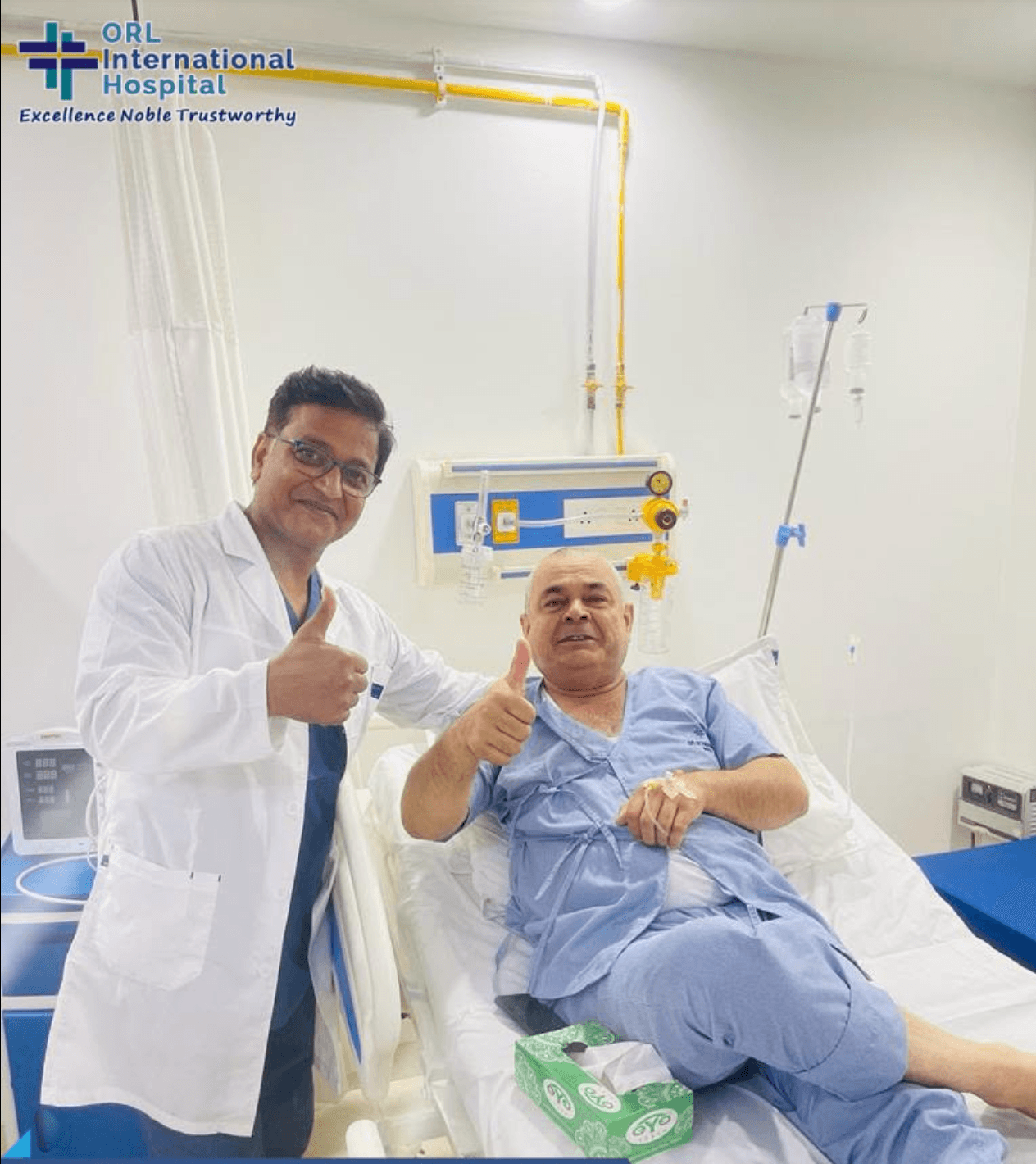
Happy Patients
Ear Surgeries Performed by Dr.(Prof.) Dhirendra Singh kushwah
Dr.(Prof.) Dhirendra Singh kushwah is an experienced ear surgeon performing a wide range of microsurgical and reconstructive procedures:
Tympanoplasty
Repair of a perforated eardrum, with or without ossicular chain reconstruction.
Mastoidectomy
Surgical removal of diseased mastoid bone for cholesteatoma, chronic mastoiditis, and complications of chronic ear disease.
Ossiculoplasty
Reconstruction of tiny hearing bones (ossicles) using prosthetic implants or the patient's own tissue.
Stapedotomy
Microsurgical procedure for otosclerosis, creating an opening in the fixed stapes and placing a prosthesis to restore sound transmission.
Cochlear Implantation
Surgical placement of an electronic device that directly stimulates the auditory nerve, restoring meaningful hearing.
Intratympanic Injections
Targeted injection of steroids or gentamicin for sudden hearing loss, Menière's disease, and refractory tinnitus.
Hearing Tests and Audiological Evaluation
Before any treatment is recommended, every patient undergoes a structured hearing assessment. The following tests are available at the clinic:
Pure Tone Audiogram
Identifies the degree and type of hearing loss across all frequencies.
Speech Audiogram
Measures how clearly a person can hear and understand spoken words — reflecting real-world functional hearing ability.
Tympanometry
Checks mobility of the eardrum and detects middle ear fluid, Eustachian tube dysfunction, or ossicular problems.
Auditory Brainstem Response
Records brain's electrical response to sound — used for infants, newborns, and uncooperative patients.
Auditory Steady-State Response
Provides frequency-specific thresholds essential for planning cochlear implant candidacy in young children.
Otoacoustic Emissions
Tests outer hair cell function in the cochlea — a quick, objective, and non-invasive screening tool.
Newborn Hearing Screening
OAE and ABR-based screening to detect hearing loss at birth before the critical language development window closes.
Cochlear & Auditory
Brainstem Implants
One of the highest programme volumes in India
Why Patients Choose Dr.(Prof.) Dhirendra Singh kushwah for Ear Treatment
Dr.(Prof.) Dhirendra Singh kushwah completed his MBBS from Jiwaji University, Gwalior (1999) and his MS in ENT from Rani Durgawati University, Jabalpur (2005). He has been practising and operating in New Delhi for over two decades and is recognised as one of India's most trusted ear surgeons.
Patients choose Dr.(Prof.) Dhirendra Singh kushwah for ear and hearing treatment because of his precision surgical technique, transparent communication, and genuine commitment to every patient's recovery — whether they are a newborn undergoing hearing screening or an adult seeking cochlear implantation after years of profound hearing loss.
He is available in English and Hindi, personally reachable at all hours, and operates from two conveniently located clinics in New Delhi.
Frequently Asked Questions
Book an Appointment with Dr.(Prof.) Dhirendra Singh kushwah
If you are experiencing any ear or hearing concern — however mild it may seem — early expert assessment leads to better outcomes. Dr.(Prof.) Dhirendra Singh kushwah and his team are available six days a week at two New Delhi locations.
Call or WhatsApp
+91-9311449825CR Park Clinic
J-1981, Near Market No. 1, Below ICICI Bank, Bipin Chandra Pal Marg, CR Park, New Delhi – 110019
Arjun Nagar Clinic
19-C, Arjun Nagar, Safdarjung Enclave, New Delhi – 110029